I-Ching Casting Methods: Yarrow Stalks vs Coins – Which Reveals Deeper Truth?
Published on August 3, 2026
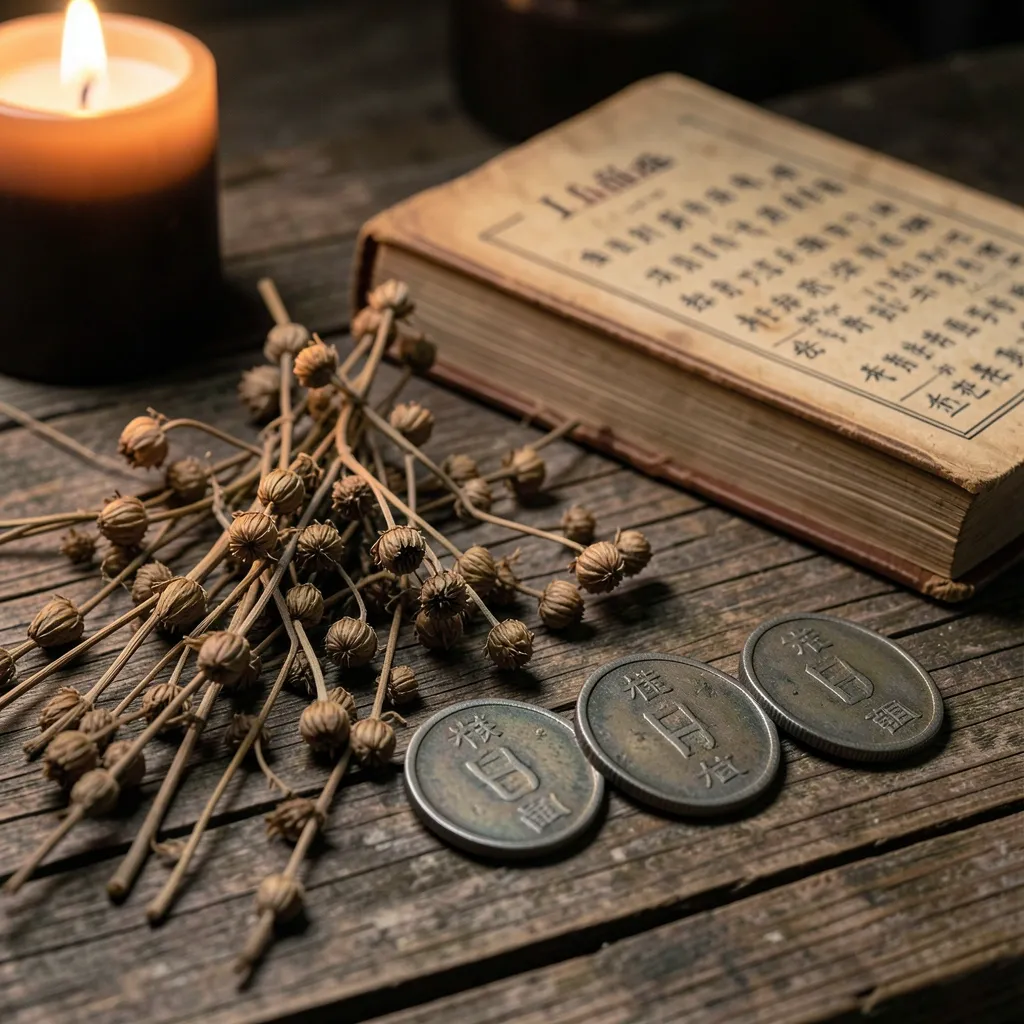
Which method reveals a more accurate reading: ancient stalks or modern coins? This question has echoed through the halls of divination halls for centuries. The I-Ching, or Book of Changes, is one of humanity's oldest oracular systems, a cornerstone of Eastern metaphysics. Yet the method you use to cast a hexagram is not merely a technical detail; it is a spiritual act. In this deep dive, we explore the two primary paths of I-Ching yarrow stalks coin casting methods, revealing their unique rhythms, probabilities, and places in the modern seeker's toolkit.
At its core, the I-Ching operates on the principle of synchronicity—a meaningful coincidence that transcends simple cause and effect. The casting method acts as the interface between the inquirer and the cosmic field. Understanding the mechanics of each method gives you a deeper appreciation for the ancient art.
The Tao of Casting: Why Method Matters
The I-Ching is more than a fortune-telling device; it is a mirror of the cosmos. The casting method is a ritual that attunes your consciousness to the "big data" of the universe. Whether you choose the laborious yarrow stalk ritual or the quick coin toss, the method shapes your intention. Let's peel back the layers of these two traditions.
The Classical Yarrow Stalk Method: A Ritual of Sacred Slowness
The yarrow stalk method is the oldest formal system for consulting the I-Ching, encoded in the ancient commentary known as the Xici Zhuan (Appended Judgments). This method requires 50 dried yarrow stalks, though one is set aside symbolically, leaving 49 in play. The process involves a complex series of divisions and removals that produce a number for each line, repeated six times to form a hexagram. Full casting takes 10–20 minutes, demanding concentration and reverence.
The procedure is a meditation in itself. You randomly divide the stalks, count them in groups of four, and derive remainders that ultimately indicate one of four possible values: 6 (Old Yin), 7 (Young Yang), 8 (Young Yin), or 9 (Old Yang). The probabilities are asymmetrical: Old Yin and Old Yang each have a 1-in-16 chance, while Young Yin and Young Yang have 7-in-16 and 5-in-16 respectively. This weighting gives predictable changes a rarer, more potent feel.
The spiritual power of the yarrow stalk method lies in its deliberate friction. Each step forces the diviner to breathe, to hold the question, and to relinquish control. The slower rhythm lowers your brainwave state, making you more receptive to intuitive insights. For many, this is the true value: not a faster answer, but a deeper self-inquiry.
The Coin Method: Speed and Accessibility
The coin method is a pragmatic innovation, likely introduced during the Han Dynasty (around 2nd century CE) to make the I-Ching accessible to commoners. It requires three identical coins, tossed six times. Each toss produces a combination of heads and tails that maps to a numeric value: heads = 3, tails = 2. Summing the three coins gives a total: 6, 7, 8, or 9.
The coin method is fast, portable, and statistically more even. The probability distribution is:
- Old Yin (6): 1/8 (12.5%)
- Young Yang (7): 3/8 (37.5%)
- Young Yin (8): 3/8 (37.5%)
- Old Yang (9): 1/8 (12.5%)
This means changing lines appear more frequently than in the yarrow stalk method. Some practitioners argue this makes readings more dynamic and responsive to current circumstances. Others feel it rushes the process, offering less opportunity for meditative focus.
Yarrow vs. Coins: A Side-by-Side Comparison
Let's break down the key differences to help you choose the right path for your practice.
Speed and Ritual Depth
- Yarrow stalks: Slow, ceremonial, deeper physical engagement. Encourages mindfulness.
- Coins: Quick, practical, easier to do anywhere. Less ceremonial.
Probability of Changing Lines
- Yarrow: Moving lines are rarer (1/8 combined), making changes more significant when they appear.
- Coins: Moving lines are more frequent (1/4 combined), resulting in more dynamic readings.
Historical Lineage
- Yarrow: Directly derived from the original Xici Zhuan; considered the "orthodox" method.
- Coins: A later human creation, but with over 2,000 years of historical use.
Physical Energy
- Yarrow: Natural plant material, carrying Earth and Wood energy. The act of sorting is a kinesthetic meditation.
- Coins: Metal objects, often carry their own energetic signatures. They can be potent but less organic.
Which Method Should You Choose?
There is no absolute "correct" answer—only the method that resonates with your intent. If you are a beginner, the I-Ching yarrow stalks coin casting methods offer two contrasting entry points.
- Choose yarrow stalks if: You seek a profound, slow ritual; you want to minimize the frequency of changing lines; you are exploring the I-Ching as a spiritual practice.
- Choose coins if: You need a quick answer; you are on the go; you prefer a more direct, no-nonsense approach.
Some masters recommend alternating: use coins for daily guidance and yarrow for major life questions. The key is consistency and sincerity. The oracle does not judge your instrument; it responds to your heart's clarity.
The Deeper Mathematics of Divination
The I-Ching's genius lies in its binary nature—six lines, each solid or broken, create 64 hexagrams. The casting method determines the generating number for each line, and that number reveals not only the line's yin or yang but also whether it is stable or moving. Moving lines transform into their opposites, creating a secondary hexagram. In yarrow stalk casting, the asymmetry of probabilities means that moving lines represent rare, significant changes. In coin casting, the even distribution makes change more common, reflecting a more fluid interpretation of events. Both systems encode a philosophical understanding of how change unfolds in life: sometimes gradually, sometimes abruptly.
The Role of True Randomness and Modern Divination
In the digital age, we have moved beyond even coins. Many online I-Ching apps use crude pseudo-random number generators, which are not truly random and can undermine the synchronicity that makes divination meaningful. YuanYu addresses this gap with its Quantum I-Ching Oracle, which leverages a physical quantum random number generator (QRNG) in its Destiny Box hardware. This ensures each hexagram emerges from genuine cosmic noise, not an algorithm.
Furthermore, YuanYu's commitment to astronomical precision extends to all consultations. By using True Solar Time Bazi Calculator, you can align your chart with the actual solar longitude at your birth location, eliminating Clock-Time fallacies. This fusion of ancient wisdom and modern technology embodies the spirit of "Spiritual Tech"—a bridge between the timeless and the tangible.
Beyond the Method: The Heart of the Oracle
Whether you cast yarrow stalks, coins, or a quantum chip, the ultimate power lies in your intention. A master diviner can coax insight from a torn leaf; a novice can miss the thunder from a perfect toss. The I-Ching is a tool for self-reflection, not fortune-telling. Each casting is a dialogue with your own subconscious and the larger field of consciousness.
Carl Jung, the Swiss psychologist, famously used the I-Ching and observed that the hexagrams reflect the archetypal patterns of the collective unconscious. The method you choose, therefore, is less about statistical accuracy and more about the quality of attention you bring to the ritual. A mindful toss with coins can outperform a distracted performance with yarrow stalks.
So, which method will you choose? The ancient stalks invite you to slow down; the modern coins invite you to act. Both are valid. To deepen your practice, explore YuanYu's array of free tools, including the Plum Blossom Divination and the Qi Men Dun Jia Matrix, and discover the cosmic pattern hidden in your own life.
Embrace the process. The hexagrams are waiting.