I-Ching and Modern Psychology: Carl Jung's Synchronicity and the Collective Unconscious
Published on August 17, 2026
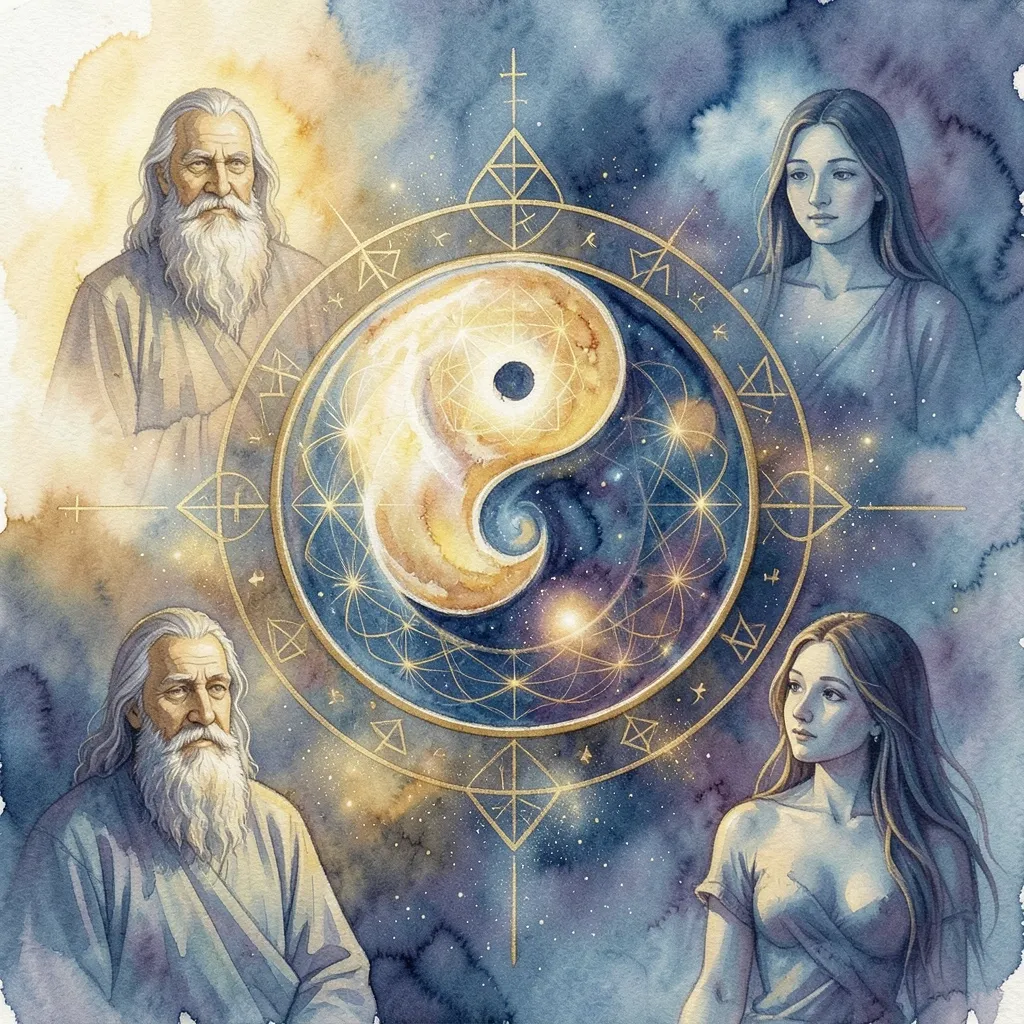
Carl Jung considered the I-Ching a tool to tap into the collective unconscious. This statement, made by one of the most influential psychologists of the 20th century, bridges the ancient Chinese divination system with the depths of modern psychology. For Jung, the I-Ching was not mere superstition; it was a profound method for accessing the archetypal patterns that shape human experience. Today, as we seek meaning in a data-driven world, the I-Ching offers a unique bridge between the rational mind and the intuitive soul.
The Problem: Why Modern Psychology Needs the I-Ching
Modern psychology has mastered the art of diagnosing the mind, but it often struggles with the soul's deeper questions: Why am I here? What is my purpose? How do I navigate uncertainty? The I-Ching, with its 64 hexagrams, provides a symbolic language that resonates with the psyche's deepest layers. Jung recognized that the I-Ching's random casting of hexagrams could reveal meaningful patterns—what he called synchronicity—an acausal connecting principle that links inner psychological states with outer events.
Agitate: Understanding Synchronicity and the I-Ching
What is Synchronicity?
Jung coined the term synchronicity to describe meaningful coincidences that cannot be explained by cause and effect. For example, thinking of a friend and then receiving a call from them immediately. The I-Ching operates on this principle: when you cast a hexagram, the resulting symbol is not random but a reflection of the current moment's energetic signature. Jung believed that the I-Ching's hexagrams correspond to archetypes—universal, primordial images stored in the collective unconscious.
The Hexagrams as Archetypes
Just as Jung identified archetypes like the Shadow, the Anima, and the Self, the I-Ching's 64 hexagrams represent fundamental life situations: creativity, waiting, conflict, fellowship, and so on. Each hexagram is a symbolic snapshot of a dynamic process. For instance, Hexagram 1, The Creative (Qian), embodies the archetype of the hero or the initiator, while Hexagram 2, The Receptive (Kun), reflects the maternal, nurturing principle. This alignment makes the I-Ching a powerful tool for psychological exploration.
How the I-Ching Aligns with Jungian Concepts
Jung's work on individuation—the process of integrating the conscious and unconscious—mirrors the I-Ching's guidance toward balance. The oracle does not predict a fixed future but offers a reflection of the present moment's energy, empowering the user to make conscious choices. This is not fatalism; it is a form of active imagination, a Jungian technique where the user dialogues with symbolic images. The I-Ching becomes a mirror for the psyche, revealing hidden patterns and potential paths.
Furthermore, the I-Ching's use of yin and yang lines corresponds to the dualities in Jungian psychology: conscious/unconscious, masculine/feminine, rational/irrational. The changing lines within a hexagram indicate areas of transformation, much like the psychological shifts described in Jung's theory of transformation.
Solve: Using the I-Ching for Psychological Self-Exploration
To integrate the I-Ching into your psychological practice, you need a tool that respects the integrity of the ancient system while leveraging modern technology. YuanYu's Quantum I-Ching Oracle offers a unique solution: it uses a physical Quantum Random Number Generator (QRNG) in the Destiny Box to capture true cosmic synchronicity, grounding the digital act in the physical, chaotic event required for genuine divination. This ensures that each hexagram cast is a authentic moment of synchronicity, not a pseudo-random algorithm.
For those who prefer a digital version, the standard I-Ching tool on YuanYu's platform still provides the full 64-hexagram library with base judgments. But the real power lies in combining the I-Ching with other metaphysical tools that align with Jungian archetypes. For example, your Bazi chart (calculated using True Solar Time) reveals your innate archetypal patterns—your Day Master, its elemental balance, and the 10 Gods that represent different roles in your life. You can explore this with the True Solar Time Bazi Calculator. Similarly, the AI Astrologer & Oracle Chat is an LLM trained on classical texts and Jungian psychology, tethered to a proprietary astronomical engine, offering personalized guidance that remembers your birth chart.
Jung himself wrote extensively on the I-Ching, even providing a famous psychological commentary on Hexagram 50, The Cauldron, which he saw as a symbol of transformation. By engaging with the I-Ching through a modern platform like YuanYu, you can continue this tradition of integrating ancient wisdom with contemporary psychology. The Digital Cultivation system even gamifies your growth, earning Virtue Points as you study the I-Ching and reflect on its meanings—a perfect complement to the Jungian path of individuation.
Practical Steps to Begin
- Cast a Hexagram: Use the Quantum I-Ching Oracle to ask a question about a psychological issue or life decision.
- Journal Your Insights: The Digital Merit Journal can help you track your reflections and the synchronicities you observe.
- Explore Your Archetypal Blueprint: Combine your I-Ching readings with your Bazi Chart to see how the hexagram's energy interacts with your innate patterns.
- Deepen with Meditation: Use the 432Hz Cosmic Frequency Converter to align your mind before casting, enhancing your connection to the unconscious.
The I-Ching is not a fortune-telling device; it is a psychological mirror. Jung's synchronicity reveals that the universe is not a random machine but a meaningful tapestry. By embracing the I-Ching as a tool for self-exploration, you step into a deeper relationship with your own psyche and the cosmos. Start your journey with YuanYu's free tools today, and discover the archetypal wisdom that has guided humanity for millennia.