Feng Shui and the Five Elements in Your Garden: Create a Harmonious Outdoor Space
Published on August 31, 2026
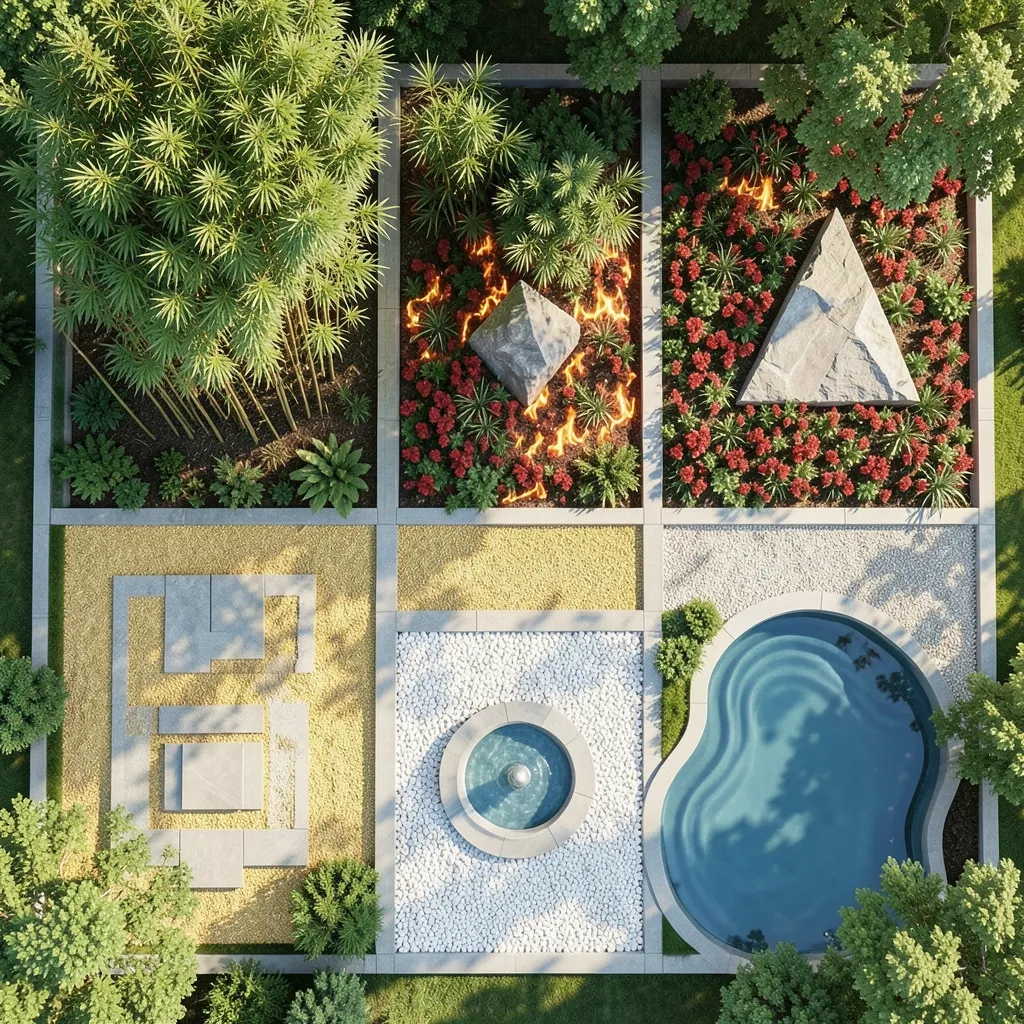
Your garden can become a living Feng Shui cure when you plant by element. Every leaf, stone, and water feature in your outdoor space is a conduit for Qi—the life force that flows through your environment. Traditional Feng Shui teaches that the Five Elements (Wu Xing) are the building blocks of this energy, and by consciously incorporating them into your garden, you transform a simple plot of land into a sanctuary of balance, abundance, and spiritual resonance.
Understanding the Five Elements in Landscaping
The Five Elements—Wood, Fire, Earth, Metal, and Water—are not just abstract concepts; they are tangible forces that interact through cycles of creation and control. In a Feng Shui garden, each element is represented by specific colors, shapes, materials, and plants. The goal is to achieve a harmonious interplay that supports your intentions, whether that be prosperity, health, or peace.
Wood Element: Growth and Vitality
Wood represents spring, new beginnings, and upward movement. In your garden, Wood is expressed through tall plants, vertical shapes, and green hues. Plant trees like bamboo, maple, or pine to anchor the Wood energy. Use rectangular or columnar planters for a structural Wood element. The Wood cycle feeds Fire, so placing Wood elements in the south (Fire sector) can amplify passion and recognition.
Fire Element: Passion and Transformation
Fire is the element of summer, heat, and illumination. It is connected to the south of your garden and brings vibrant energy. Incorporate red, orange, and purple flowers such as roses, tulips, or hibiscus. Triangular shapes—like a pyramid trellis or a pointed sculpture—activate Fire. Fire elements should be used sparingly to avoid overstimulation; too much can lead to aggression or burnout.
Earth Element: Stability and Nourishment
Earth is the center, grounding all other elements. It represents late summer, harvest, and stability. Use square shapes, yellow and beige tones, and low, flat surfaces. A stone patio, brick pathway, or terracotta pots introduce Earth energy. Earth is the natural recipient of Fire’s ash, so placing an Earth element (like a square fire pit) in the center of the garden can create a strong grounding anchor.
Metal Element: Clarity and Precision
Metal governs autumn, organization, and structure. It is associated with white, gray, and metallic colors. Round or arched shapes—such as a circular fountain, a metal bench, or a white gravel path—bring Metal energy. Metal plants include white flowers, silver foliage, or ornamental grasses like lavender and dusty miller. Metal controls Wood, so if your garden has too much Wood growth, adding a Metal element (like a wind chime) can restore balance.
Water Element: Wisdom and Flow
Water is the element of winter, stillness, and deep wisdom. It is expressed through blue, black, and irregular, wavy shapes. A pond, birdbath, or small stream is the classic Water feature. Even a dark blue ceramic bowl or a curved path can invoke Water energy. Water nourishes Wood, so placing a water feature near the Wood sector (east or southeast) supports growth and abundance.
Mapping Your Garden with the Bagua
To apply Feng Shui garden Five Elements landscaping effectively, overlay the Bagua (the energy map) onto your property. The Bagua divides your garden into nine sectors, each corresponding to a life area (wealth, fame, relationships, etc.). Using the Eight Mansions or Flying Star school, you can determine which elements are missing or excessive in each sector. For a quick start, stand at the entrance of your garden facing inward; the left back corner is the Wealth area (attract Wood and Water), the center is Health (Earth), and the front right is Helpful People (Metal).
Using True Solar Time for Precision
Just as the ancient masters calculated the exact cosmic energies at the moment of birth, YuanYu’s technology brings that same precision to your garden. By knowing your personal Bazi chart—which reveals your elemental strengths and weaknesses—you can tailor your garden to support your unique destiny. For instance, if your chart is deficient in Fire, you can add red flowers and triangular structures to the south sector. If you have excess Metal, introduce Water features to control it. YuanYu’s free True Solar Time Bazi Calculator gives you the foundational data to make these decisions.
Practical Steps for an Elemental Garden
- Diagnose your current energy – Use YuanYu’s Feng Shui Flying Stars tool to analyze the annual and monthly energies affecting your garden. This tells you which sectors to activate or calm.
- Choose a dominant element – Decide the primary intention of your garden (e.g., abundance, health, romance) and select a corresponding element. Then support it with the cycle of generation.
- Balance the five elements – Ensure each element is represented at least symbolically. A small water feature, a few red flowers, a square stone, a round metal sculpture, and a tall tree cover all bases.
- Time your changes – For major renovations, use YuanYu’s Quantum I-Ching Oracle or Qi Men Dun Jia Matrix to find the most auspicious planting dates. This aligns your efforts with celestial rhythms.
Beyond the Physical: The Spiritual Dimension
A garden designed with the Five Elements is not just a visual delight; it becomes a living mandala for your spiritual cultivation. In the YuanYu ecosystem, we call this Digital Cultivation—using technology to deepen your connection to ancient wisdom. Your garden can be a tangible expression of your Soul Blueprint, the pre-incarnation contract that guides your life’s themes. For example, if your Soul Blueprint emphasizes healing, a Water-Earth garden (wisdom and stability) can support that path.
Furthermore, the act of gardening itself can be a form of meditation and merit accumulation. YuanYu’s Digital Merit Journal allows you to log your mindful gardening sessions as virtuous deeds, earning Virtue Points toward your chosen Cultivation Path (Immortal, Buddha, or Sage). This gamification of your karmic growth turns weeding and watering into a spiritual practice.
Conclusion: Your Garden as a Portal
When you align your garden with the Five Elements and your personal destiny, you create a portal where the macrocosm of the universe meets the microcosm of your home. The Feng Shui garden Five Elements landscaping approach is not a one-time fix but an ongoing dialogue with nature. As seasons change and your life evolves, your garden will adapt. YuanYu’s suite of free tools—from the AI Astrologer & Oracle Chat to the Tropical Natal Chart—helps you stay attuned to these shifts. Start with a simple intention, add one element at a time, and watch your garden become a living Feng Shui cure that nurtures your soul.