Feng Shui Essentials: A Beginner's Path to Harmony
Published on June 5, 2026
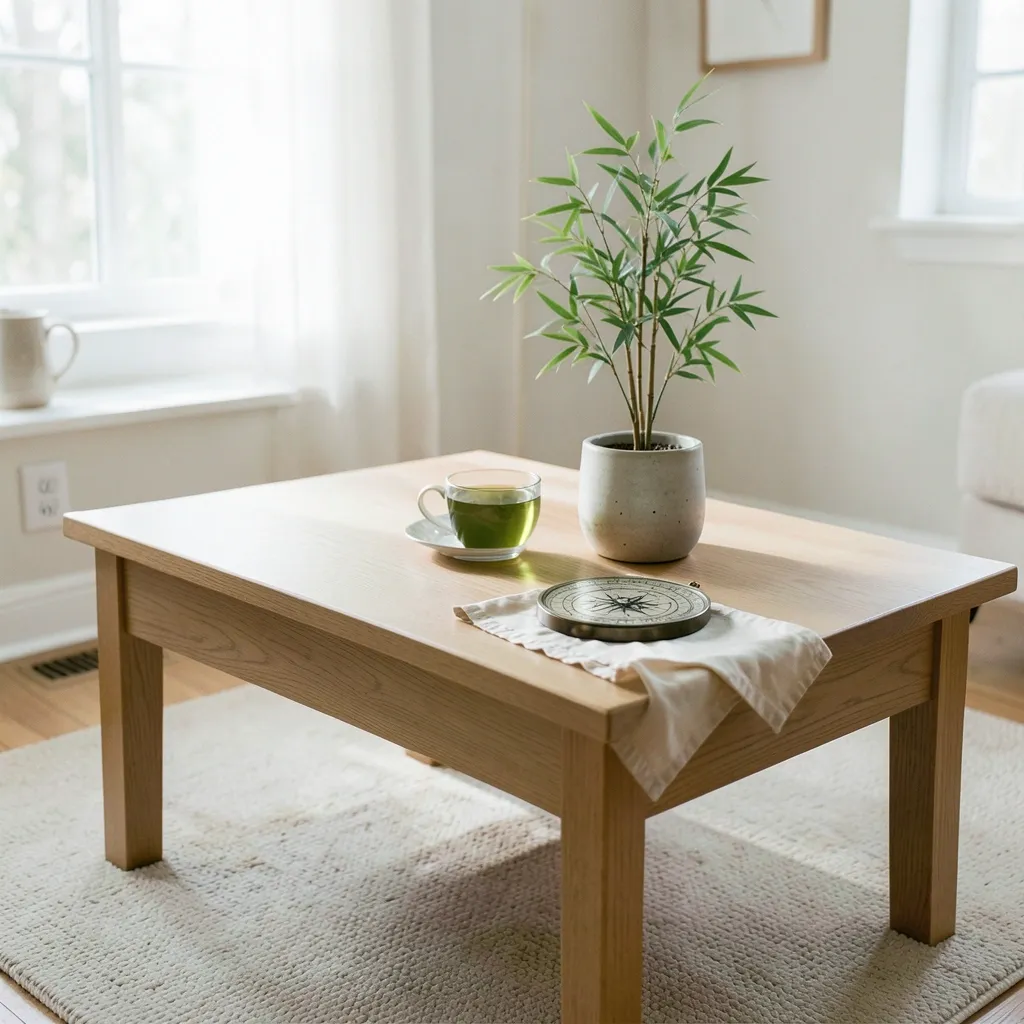
Feng Shui Essentials: A Beginner's Path to Harmony
Start your Feng Shui journey for a more harmonious living space. Feng Shui, which translates to "wind and water," is an ancient Chinese practice that seeks to align human existence with the underlying flow of Qi—the life force that permeates everything. At its core, Feng Shui is not about superstition; it is a sophisticated system of environmental psychology and energy management that has been refined over thousands of years. For the modern seeker, understanding these principles can transform a chaotic home into a sanctuary of balance and prosperity.
What is Feng Shui?
Feng Shui is a branch of Chinese metaphysics that studies how the placement of objects, colors, shapes, and directions affects the flow of Qi in a space. The goal is to create an environment where Qi flows smoothly, nourishing the inhabitants and supporting their goals—whether in health, wealth, relationships, or spirituality. Unlike astrology, which focuses on timing and destiny, Feng Shui is a spatial practice that gives you direct agency to modify your immediate surroundings. It works hand-in-hand with your Bazi chart to tailor the environment to your unique energetic blueprint.
The Core Concepts
Before diving into practical steps, it's essential to grasp the foundational principles:
- Qi (Chi): The vital energy that flows through all things. In Feng Shui, Qi should be gentle and winding, not harsh or stagnant. Sharp corners, clutter, and straight corridors create "Sha Qi" (killing energy), while gentle curves and open spaces invite "Sheng Qi" (life-giving energy).
- Yin and Yang: The balance of opposites. A harmonious space needs both Yin (quiet, dark, soft) and Yang (active, bright, hard) elements in appropriate proportions. A bedroom should be more Yin; a home office more Yang.
- Five Elements (Wu Xing): Wood, Fire, Earth, Metal, and Water. Each element has associated shapes, colors, and materials. They interact in cycles of creation (e.g., Wood feeds Fire) and destruction (e.g., Water extinguishes Fire). Balancing these elements in a room brings harmony.
- Bagua: The energy map of a space. An octagonal grid that divides your home into nine areas, each corresponding to a life aspect (Wealth, Fame, Love, Family, Health, Creativity, Knowledge, Career, and Helpful People). The Bagua is overlaid onto the floor plan, with the entrance as the base.
Getting Started: Practical Steps for Beginners
Here are actionable ways to bring Feng Shui into your home today:
- Declutter Your Space: Clutter is stagnant Qi. Let go of items you no longer need, repair broken objects, and organize drawers. A clear space fosters a clear mind. Start with your entrance—the "mouth of Qi"—to allow energy to enter freely.
- Position Your Bed and Desk: In the bedroom, place your bed in the "command position"—diagonal from the door, not in line with it, with a solid wall behind you. This gives you a sense of safety and control. At your desk, face the entrance to see opportunities coming.
- Use the Five Elements: Identify which element is weak or excessive in your space using your Bazi chart. For example, if you lack Water, add a small fountain or black/dark blue decor. If you have too much Fire, introduce Earth elements (crystals, ceramics) to absorb it.
- Mirrors with Care: Mirrors can double positive energy but also cause restlessness if placed incorrectly. Never face a mirror directly at the bed or front door—it can reflect good luck away.
- Invite Nature: Plants bring Wood energy and purify the air. Choose rounded leaves over spiky ones. A healthy plant in the Wealth area (southeast corner of your home or office) can attract abundance.
Advanced Insights: Beyond Basics
As you deepen your practice, you'll discover that Feng Shui is intricately linked with time and personal destiny. The Feng Shui Flying Stars system, for instance, tracks the movement of annual and monthly energies—stars that can bring good fortune or challenges. Using this system, you can activate favorable stars and suppress harmful ones with specific cures (e.g., salt water, metal objects, or six Chinese coins). Your Zi Wei Dou Shu chart can also reveal which palaces (life areas) are currently activated, guiding you on where to focus your Feng Shui efforts.
Another powerful method is Qi Men Dun Jia—a divination system that pinpoints the best direction and time for critical actions like moving into a new house, starting a business, or even placing a symbolic object. Combined with Auspicious Date Selection, you can align your environmental adjustments with cosmic timings for maximum impact.
Common Mistakes to Avoid
- Overcorrecting Without a Chart: Generic Feng Shui tips are helpful, but your unique elemental balance (derived from your Bazi or Zi Wei chart) should guide your choices. For example, a person with strong Wood and weak Metal may need Metal elements to trim Wood, not more Wood.
- Ignoring the Outside: The exterior environment—nearby structures, roads, natural features—affects your home's Qi. A sharp corner or a pole facing your front door is a poison arrow; use a Bagua mirror or plants to deflect it.
- Treating Feng Shui as a One-Time Fix: Energy changes over time. Annual stars, personal luck cycles, and life transitions demand periodic adjustments. Review your space at least once a year or after major life events.
Your personal birth chart is the ultimate tool for precision Feng Shui. The YuanYu app provides free, astronomically accurate calculators—such as the True Solar Time Bazi Calculator and the Zi Wei Dou Shu Astrolabe—that reveal your elemental profile and current luck pillars. With this data, you can choose the best elements, colors, and directions to enhance specific areas of your life. The AI Astrologer & Oracle Chat can even answer your Feng Shui questions in real time, drawing on classical texts and your personal chart.
Conclusion: Your Journey Begins Now
Feng Shui is not a quick fix but a profound relationship with your environment. By learning these basics, you take the first step toward a home that supports your highest potential. As you align your space with the natural flow of Qi, you may notice increased calm, better sleep, and unexpected opportunities. The path to harmony is open—walk it with intention.
To begin your personalized Feng Shui transformation, download the YuanYu app and explore our free tools. Generate your Bazi chart, check the Flying Stars for your home, and receive guidance from the AI Astrologer. Your harmonious space awaits.